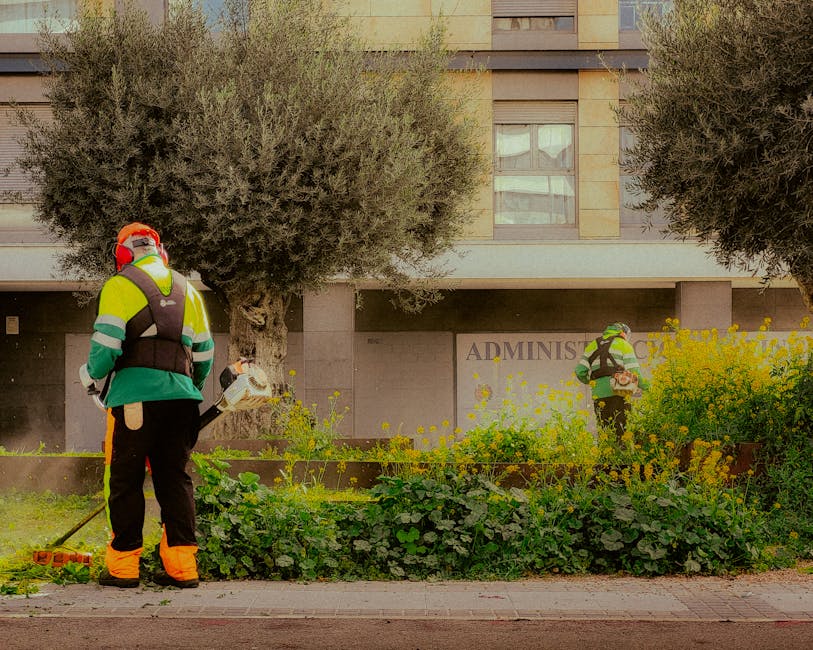
Royal Brompton garden care for hospital area properties
Green spaces around hospitals do more than "look nice". They help soften a busy site, support wayfinding, improve the experience for staff and visitors, and, in the right setting, give patients and nearby residents a calmer place to breathe for a moment. That is especially true for Royal Brompton garden care for hospital area properties, where maintenance has to balance presentation, access, hygiene, safety, and the day-to-day reality of a working clinical environment.
In practice, this kind of garden care is less about decorative gardening and more about careful site management. Paths need to stay clear. Planting needs to be tidy without becoming high-maintenance. Waste has to be removed properly. And the work itself needs to happen with minimal disruption, because nobody wants a hedge trimmer roaring past a clinic entrance at the wrong time. Let's face it, the wrong approach is obvious very quickly.
This guide explains what hospital-area garden care involves, how it works, who it suits, where problems usually appear, and what best practice looks like in a busy London setting. If you are responsible for a private property near the Royal Brompton area, a managed healthcare site, a medical office courtyard, or associated residential and commercial buildings, you will find practical direction here.
For readers looking to compare wider maintenance support, it can also help to review related services such as professional garden maintenance, landscaping services, and tree surgery and arboricultural care if larger shrubs or trees are becoming an issue around the site.
Table of Contents
- Why Royal Brompton garden care for hospital area properties matters
- How Royal Brompton garden care for hospital area properties works
- Key benefits and practical advantages
- Who this is for and when it makes sense
- Step-by-step guidance
- Expert tips for better results
- Common mistakes to avoid
- Tools, resources and recommendations
- Law, compliance, standards, or best practice
- Options, methods, or comparison table
- Case study or real-world example
- Practical checklist
- Conclusion
- Frequently asked questions
Why Royal Brompton garden care for hospital area properties Matters
Hospital-adjacent properties face a different set of pressures from ordinary homes or office gardens. There is more foot traffic, more need for clear access, and often more scrutiny over tidiness, safety, and how a site feels to visitors. In a healthcare environment, a neglected planting bed or an overgrown entrance can create a stronger negative impression than it would elsewhere.
That is because people arriving at medical sites are often already under stress. They may be worried, tired, late, or carrying something fragile. A well-kept exterior does not solve that, of course, but it can reduce friction. A neat path, clipped edges, healthy planting, and clear sightlines send a quiet message: this place is looked after.
There is also a practical side. Dense planting can hide litter, block drainage, encourage slips, and make it harder to spot damage or obstruction. In wetter months, you notice this immediately. Moss creeps in. Leaves gather at corners. Corners turn slick. A little routine care prevents a lot of small headaches.
For hospital area properties around the Royal Brompton area, the challenge is not just appearance. It is about maintaining a landscape that works in a live, often sensitive, urban setting. That means choosing the right plants, keeping maintenance regular, and understanding where operational needs override ornamental ambition. You want calm, not clutter.
How Royal Brompton garden care for hospital area properties Works
Good hospital-area garden care usually starts with a site assessment. The aim is to understand how the property is used, which areas are public or semi-public, where access is sensitive, and which spaces need low-maintenance rather than high-impact improvements. A courtyard used by staff on breaks will not need the same treatment as a front-facing entrance or a boundary strip visible from the street.
After that comes a maintenance plan. In a straightforward case, this may involve regular mowing, hedge trimming, weeding, pruning, litter picking, seasonal planting, leaf clearance, and checking for hazards such as broken paving, overgrown branches, or blocked drains. For larger or more mature sites, the plan can also include arboricultural work, soil improvement, and longer-term planting replacement.
One thing people sometimes miss is timing. On a hospital-area property, the "best" time for garden work is not always the best time for the garden itself. Works may need to avoid shift changes, visiting hours, delivery windows, emergency access routes, or quieter periods preferred by patients. A good contractor plans around the site, not just around a diary.
If tree-related issues are affecting light, access, or safety, it may be worth looking at specialist support through tree surgery and pruning services. For more structured estate support, some property managers also pair garden care with ongoing grounds maintenance so the site remains consistent through every season.
In real terms, the process often looks like this:
- Inspect the site and identify priority areas.
- Agree access points, timing, and any restrictions.
- Set the maintenance schedule for routine and seasonal work.
- Carry out the works with minimal disruption.
- Clear all waste, check for issues, and report anything needing follow-up.
- Review the site regularly and adjust the plan as the property changes.
Key Benefits and Practical Advantages
The benefits are both visible and operational. A properly managed outdoor area gives a much better first impression, but that is only the start. Here are the main advantages property owners and managers usually care about.
- Cleaner presentation: Tidy planting and well-cut edges help the whole site feel organised and cared for.
- Safer access: Regular clearance reduces trip hazards, overgrowth, blocked sightlines, and leaf build-up on hard surfaces.
- Lower long-term costs: Keeping on top of small issues often prevents bigger remedial jobs later.
- Better visitor experience: Patients, families, suppliers, and staff all notice whether a property feels calm or neglected.
- Reduced disruption: A routine plan is easier to manage than repeated emergency fixes.
- Improved resilience: Healthy planting is more likely to cope with drought, shade, pollution, and heavy urban use.
There is another benefit that gets overlooked. Good external maintenance can make internal operations easier. If entrances are clear, rubbish is controlled, and pathways are safe, staff spend less time dealing with avoidable distractions. Small thing, but it adds up.
Expert summary: In a hospital-area setting, the best garden care is usually the kind you barely have to think about. It stays neat, stays safe, and quietly supports the property without drawing attention to itself.
Who This Is For and When It Makes Sense
This type of service is relevant to a surprisingly wide group of property owners and managers. It is not only for hospitals themselves. In the Royal Brompton area, the same principles can apply to medical offices, specialist clinics, private healthcare premises, residential blocks near hospital routes, supported living accommodation, and commercial properties that sit within or beside a sensitive healthcare environment.
You may need this if:
- the garden or frontage is visible to patients, visitors, or the public;
- there are repeated complaints about weeds, litter, or untidy boundaries;
- paths, steps, or entrances are becoming less safe in wet weather;
- trees, hedges, or shrubs are blocking light or access;
- your current gardener is not accustomed to working around operational sites;
- you need scheduled works that respect access, privacy, and quiet periods.
It also makes sense if you are trying to shift from reactive gardening to planned grounds care. That is usually the moment people realise they need a more structured approach. A one-off tidy-up can help, sure, but it rarely solves the underlying issue if a property has multiple pressure points.
If your site has broader outdoor improvement needs, a conversation about landscaping support may be useful. And if you are simply trying to keep a maintained space looking sharp all year round, a regular garden maintenance programme is often the cleaner answer.
Step-by-Step Guidance
If you are planning Royal Brompton garden care for hospital area properties, the best results usually come from a methodical process. Not flashy. Just sensible, clear, and repeatable.
1. Walk the site properly
Start with a full walkaround at ground level. Look at the obvious areas, yes, but also the edges, rear access routes, service yards, and any places that are easy to ignore until they cause trouble. Check where people actually walk, not just where the plan says they should walk.
2. Separate priority areas from cosmetic areas
Near entrances, ramps, car parks, and delivery routes, the standard should be tighter. A courtyard used only occasionally may allow more flexibility. This distinction helps prevent overspending in low-use areas while still protecting the places that matter most.
3. Assess planting by maintenance load
Some plants look lovely in spring and then behave like they own the place by July. Lovely, until they are not. Choose shrubs, perennials, and groundcover that suit the level of care the property can realistically sustain.
4. Set the work calendar around operations
This is one of the most important steps. Agree dates and time windows for mowing, pruning, leaf clearance, and waste removal. A good contractor should work around access needs rather than create them.
5. Deliver the routine works
These usually include mowing, edging, weeding, pruning, deadheading, clearing leaves, washing down hard surfaces where needed, and tidying front-facing areas. The details vary by site, but the principle stays the same: clean, safe, understated.
6. Record issues that need follow-up
If a tree is unstable, drainage is failing, or paving has lifted, that should be noted clearly. Good maintenance does not mean pretending deeper problems do not exist.
7. Review and refine
After a few visits, assess what is working. Maybe a shaded bed needs different planting. Maybe the leaf-fall is heavier than expected. Maybe the bin store needs its own routine. Small changes can make the whole site easier to manage.
Expert Tips for Better Results
There are a few practical habits that consistently improve outcomes on hospital-area sites. None are dramatic, but they make a noticeable difference over time.
- Choose low-fuss planting near entrances. Repeated pruning is not always the answer. Better plant choice often saves money and avoids a constant "slightly messy" look.
- Keep sightlines open. This helps with safety, wayfinding, and that open, reassuring feeling people appreciate on arrival.
- Use seasonal planning, not just reactive visits. Spring growth, summer watering, autumn leaf-fall, and winter clearance each create different pressures.
- Think in layers. Beds, hedges, paths, bins, gutters, and boundary lines all affect how tidy the site feels. If one layer slips, the whole place feels off.
- Prioritise consistency. A site that is "very tidy sometimes" is often less reassuring than one that is reliably neat all year.
And honestly, consistency beats heroics. Every time.
If a property has trees that are shading clinical or residential spaces too heavily, or dropping debris onto walkways, you may need more than routine pruning. In those cases, specialist support like tree surgery and canopy management can help restore balance without overcutting the tree.
Common Mistakes to Avoid
Hospital-area properties often run into the same mistakes again and again. They are easy to make, especially when the space is busy and the maintenance budget is tight.
- Leaving maintenance too late. Once a site looks neglected, it takes much longer to recover the impression.
- Using planting that is too high-maintenance. Pretty in theory, awkward in practice.
- Ignoring access timing. A brilliant job done at the wrong time can still cause complaints.
- Forgetting hidden areas. Rear boundaries, bin stores, service routes, and side returns matter more than people think.
- Over-pruning or "rounding off" everything. It can make a site look stripped and unnatural.
- Not planning for seasonal change. Autumn leaf-fall and spring growth need different responses.
- Failing to report structural or drainage issues. Gardening can hide symptoms for a while, but not fix the cause.
A slightly untidy shrub can be forgiven. A blocked path outside a hospital property? Not so much. That is the difference.
Tools, Resources and Recommendations
Good results depend on the right tools and a sensible maintenance approach. You do not need a huge kit list, but you do need equipment that suits the site and staff who know how to use it properly.
| Need | Useful approach | Why it helps |
|---|---|---|
| Routine upkeep | Scheduled mowing, edging, weeding, and litter clearance | Keeps the site presentable with less drift between visits |
| Seasonal tidying | Leaf clearance, deadheading, planting refreshes | Prevents the site from looking tired or untidy at peak times |
| Boundary and height control | Hedge trimming and shrub reduction | Maintains sightlines and access without overcutting |
| Tree-related issues | Arboricultural inspection and pruning | Reduces risk from overhang, shade, or debris |
| Site consistency | Planned grounds maintenance contract | Creates a stable routine and clearer accountability |
Some properties also benefit from a one-off reset before switching to maintenance. That may include clearing overgrowth, improving borders, and shaping the site into something easier to manage long term. If that sounds familiar, a broader maintenance visit or light landscaping work can be a sensible starting point.
For managers comparing providers, useful questions include: Do they work around sensitive access? Do they provide waste removal? Can they handle both soft landscaping and tree issues? Are they used to London sites with tight boundaries and limited storage? These are the questions that separate a generic gardener from someone who understands the environment.
Law, Compliance, Standards, or Best Practice
For a hospital-area property, compliance is less about decorative gardening rules and more about safe, responsible site management. The exact obligations depend on the property type, ownership, and operational use, so it is wise to treat this as practical best practice rather than legal advice.
In the UK, property managers typically need to think about general health and safety duties, safe access, risk reduction, and proper contractor management. That usually means:
- keeping paths and entrances free from avoidable hazards;
- making sure work is planned to avoid unsafe disruption;
- using competent contractors for higher-risk tasks such as tree work;
- managing waste responsibly;
- being mindful of privacy, noise, and operational sensitivity.
On healthcare-adjacent sites, a cautious approach is especially sensible. A noisy machine near an entrance, unsecured tools, or debris left in the wrong place can create problems quickly. Good practice is usually straightforward: plan well, communicate clearly, and tidy thoroughly.
If your site includes larger trees, remember that tree work is its own discipline. A light trim is not the same thing as safe arboricultural management. Where trees affect buildings, access, or visibility, it is better to ask for a proper assessment than to guess. Truth be told, guessing with trees rarely ends well.
Options, Methods, or Comparison Table
Different properties need different approaches. Some need routine maintenance only. Others need a mixture of gardening, landscaping, and specialist pruning. Here is a simple comparison to help you judge what fits best.
| Approach | Best for | Strengths | Limitations |
|---|---|---|---|
| Basic garden tidying | Small, low-pressure areas | Affordable and quick for light maintenance | Can be too limited for busy hospital-area properties |
| Planned garden maintenance | Regularly used entrances, courtyards, and boundaries | Reliable, consistent, and easier to budget | Requires ongoing scheduling and site familiarity |
| One-off clearance | Overgrown or neglected sites | Fast reset and immediate improvement | Does not prevent the issue from returning |
| Garden maintenance plus landscaping | Sites needing both upkeep and layout improvement | Can solve structural and visual problems together | More planning needed upfront |
| Specialist tree care included | Sites with mature trees, heavy shading, or access issues | Improves safety and long-term site health | May require more formal assessment and coordination |
For many Royal Brompton area properties, the sweet spot is a planned maintenance approach with occasional specialist support. That gives you continuity without overcomplicating the contract. Not every site needs a grand redesign. Sometimes it just needs reliable attention.
Case Study or Real-World Example
Consider a modest mixed-use property near a hospital route: a front-facing planting strip, a small rear service area, a couple of trees, and a courtyard visible from windows used by staff and visitors. At first glance, it seems simple enough. But the site has problems in layers. Weeds keep returning around the entrance. The hedge is pushing into the path. Autumn leaves build up fast. And the rear area gets ignored because nobody sees it every day.
The practical fix is rarely dramatic. A contractor might begin with a full tidy-up, remove debris, reduce overgrowth, and restore clear edges. The maintenance plan would then shift to regular visits: lighter visits in slower growth periods, more frequent care in spring and early summer, plus leaf clearance as the seasons turn. The hedge might be reduced to a manageable height, and the planting perhaps simplified so it does not need constant fussing.
After that, the property feels calmer. Not flashy. Just calmer. Staff stop mentioning the front strip. Visitors are not met by tangled borders. The service area is safer to use. And the people responsible for the site can focus on bigger tasks rather than constantly dealing with plant-related surprises.
That kind of improvement is usually the real goal. Not garden perfection. Just a site that works.
Practical Checklist
Use this checklist if you are reviewing Royal Brompton garden care for hospital area properties or preparing to brief a contractor.
- Have you identified all public, semi-public, and service access areas?
- Are entrances, paths, and ramps clear and easy to navigate?
- Do the planting choices match the site's maintenance capacity?
- Are hedge heights and shrub widths controlled safely?
- Is leaf fall, litter, and seasonal debris being cleared often enough?
- Are trees monitored for shading, overhang, or safety concerns?
- Does the contractor understand quiet times, access rules, and operational sensitivity?
- Is waste removed from site promptly and responsibly?
- Are drainage, paving, and border edges checked during visits?
- Is there a realistic schedule in place for year-round maintenance?
If you can answer "yes" to most of those, you are probably on the right track. If not, that is fine too. It just means there is a clear place to start.
Conclusion
Royal Brompton garden care for hospital area properties is about more than maintaining a pleasant view. It is about keeping a sensitive site safe, calm, and easy to use while supporting the needs of patients, visitors, staff, and nearby residents. The best results usually come from regular attention, sensible planting choices, good timing, and a contractor who understands that hospital-area work is not ordinary garden work.
Whether you need routine upkeep, a one-off reset, or a more structured grounds plan, the priority stays the same: keep the site presentable without creating disruption. That is the real standard. Everything else follows from it.
Get a free quote today and see how much you can save.
If you are ready to improve the outdoor impression of your site, it may be the right moment to review your maintenance schedule and choose a service approach that fits the property properly. A tidy, well-managed exterior can quietly make the whole place feel easier to trust.
Frequently Asked Questions
What does Royal Brompton garden care for hospital area properties usually include?
It usually includes mowing, edging, weeding, pruning, hedge trimming, leaf clearance, litter removal, and general tidying of entrances, courtyards, and boundaries. On some sites, it also includes tree care or light landscaping where needed.
How often should a hospital-area garden be maintained?
That depends on the site, the planting, and how visible the area is. Busy entrances and public-facing spaces often need more frequent attention than low-use rear areas. Seasonal growth can also change the schedule quite a bit.
Is this service only for hospitals?
No. It can also suit medical offices, clinics, residential blocks near hospitals, sheltered housing, and commercial properties in sensitive urban locations. The key factor is the setting, not just the building type.
Why is hospital-area garden maintenance different from standard garden care?
Because timing, access, cleanliness, and presentation matter more. Work often needs to avoid disrupting patients, staff, deliveries, and visitors. The site also needs to feel calm and safe, not just neat.
Can garden care help with safety around entrances and paths?
Yes. Regular maintenance can reduce trip hazards, overgrowth, blocked sightlines, and slippery debris on hard surfaces. It does not replace repairs, but it does help keep risks under control.
What if the site has overgrown trees?
That is usually a sign that specialist tree work may be needed, not just routine gardening. Tree surgery or arboricultural assessment can help with canopy reduction, overhang, and long-term safety.
Do you need planning permission for garden care work?
Usually no for routine maintenance, but some tree work or major changes may require checks depending on the property and location. If there are protected trees or specific site constraints, it is worth confirming before work begins.
How do I choose the right contractor for a hospital-area property?
Look for someone who understands sensitive access, waste removal, seasonal maintenance, and clear communication. A good contractor should be comfortable working quietly and professionally around busy sites.
What are the most common problems on these properties?
The most common issues are weeds, leaf build-up, overgrown hedges, poor planting choices, hidden debris, and maintenance that happens too late. In London, limited space can make all of those feel worse, fast.
Can one-off clearance be enough?
It can help if the site is badly overgrown, but it usually does not solve the underlying issue. For lasting results, a regular maintenance plan is normally more effective.
How can I keep maintenance costs under control?
Choose planting that suits the site, keep to a regular schedule, and deal with small issues before they become bigger ones. Planned maintenance is often more cost-effective than repeated emergency callouts.
What should I ask for in a quote?
Ask what is included, how often visits will happen, whether waste removal is covered, and whether the contractor can handle tree-related or landscaping work if needed. It is also sensible to ask how they plan around access and quiet times.
Is there a best season to start?
Spring is often a practical time to begin because growth is active and the site can be set up for the months ahead. That said, any season can be a good starting point if the property needs attention now.
What if the garden is small?
Small spaces still benefit from proper care, sometimes even more so. Tight frontages, side returns, and small courtyards can look untidy quickly if they are neglected, so a simple routine often makes a big difference.